Chapter IV · Guardian Angels
Why Two Websites Don’t Give You the Same Guardian Angel
Try it for yourself: enter your birthday on two websites that promise to name your guardian angel. There’s a good chance you’ll get two different names. Neither one is lying to you. The reason they disagree comes down to a calendar question that is two centuries old.
By Alma, Guardian of Angels · 5 min read ·
A count that doesn’t come out even
If this has happened to you, you may have decided none of it could be taken seriously. I understand. But the explanation is more interesting than a simple mistake.
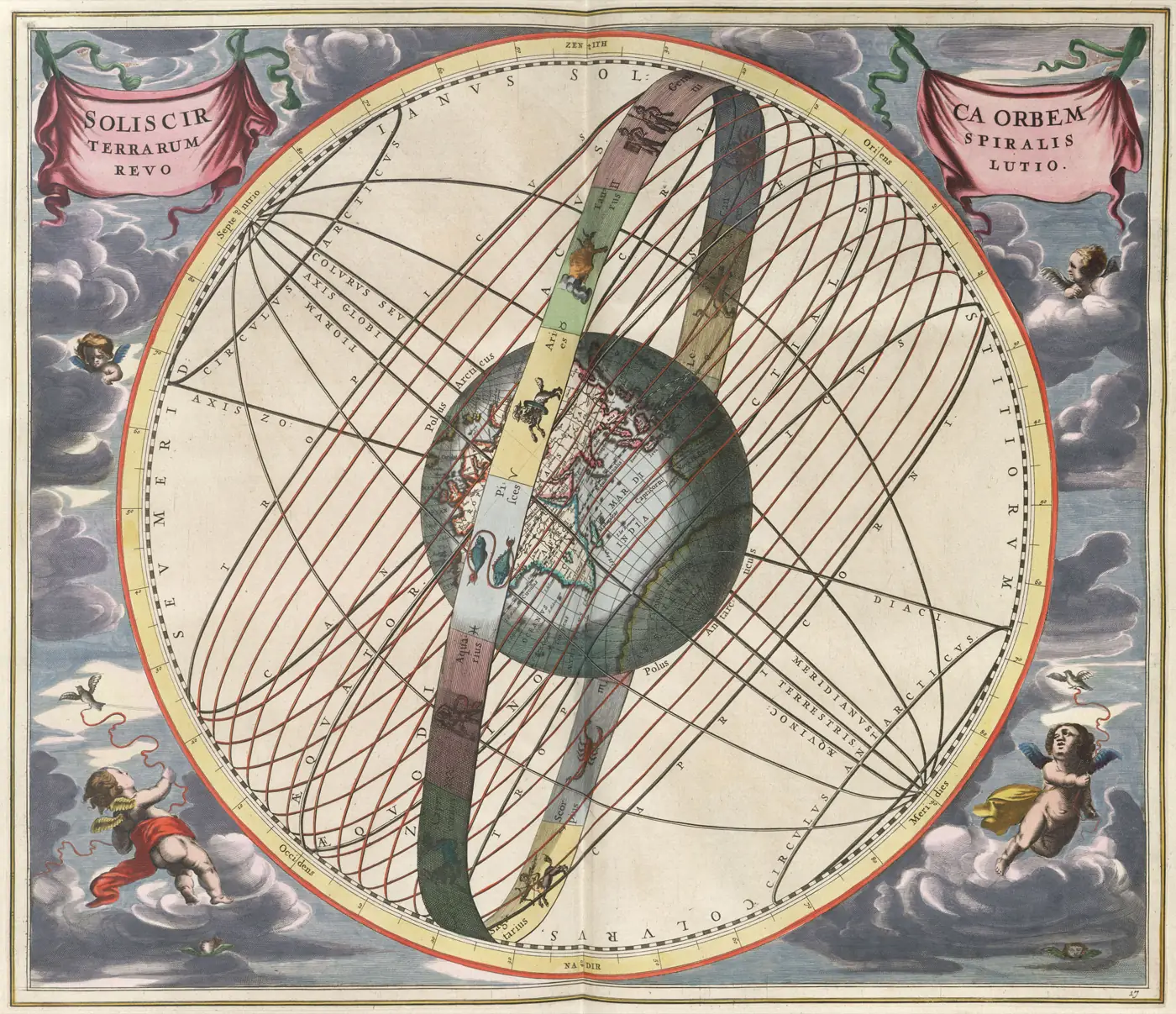
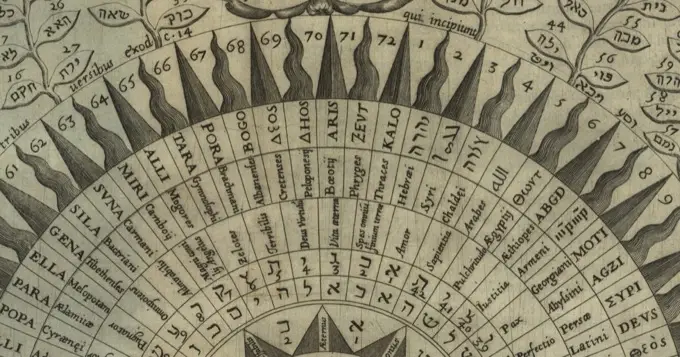
It all starts with a division that doesn’t come out even. The tradition counts 72 angels and spreads them around a circle, the one the Sun appears to travel across the sky over a year. A circle has 360 degrees, so each angel gets five, with nothing left over. The trouble is that a year doesn’t have 360 days. It has 365. That leaves five days too many, and everything depends on what you decide to do with them.
In 1823, five days left outside the circle
Lazare Lenain, the workman from Amiens who built the first calendar of the angels in 1823, chose the simplest solution. His year begins on March 20 at midnight, at the spring equinox. Each angel gets five days, no more and no less, and the seventy-second ends his watch on March 14 of the following year.
That leaves five days, March 15 through 19, which Lenain simply placed outside the circle. He gave four of them to the spirits of the four elements and set the last one aside for God. The result is a curious one: for anyone born on those dates, his table of periods names no angel at all.
Today, periods of four, five, or six days
The tables you find everywhere today made a different choice. They start on March 21, and instead of setting five days aside, they spread them out over the whole year. In the most widely used one, most angels keep five days, seven get six, and two have to make do with four.
That choice isn’t arbitrary. It comes from astronomy. Seen from the Earth, the Sun doesn’t always move at the same pace: it slows down in summer and speeds up in winter. To travel five degrees, it needs a little more than five days in July and a little less in December. The modern tables take that difference into account. In other words, they follow the sky, while Lenain followed the calendar.
Sixty-three days of agreement in a year
I wanted to know how far the disagreement went. So I set the two tables side by side, the one from 1823 and the one used today, and compared them day by day.
At the start of spring, they almost keep pace with each other, just one day apart. Then the gap slowly widens: two days by the end of April, three in June, five by the end of July, eight in the fall. The result surprised me. Over a whole year, the two tables name the same angel on only sixty-three days, all of them in spring and early summer. After July 17, they never agree again.
Take someone born on October 7. Today’s table says Rehael, the 39th angel. Lenain’s table says Hahahel, the 41st. Two angels apart for one and the same person, depending on which book you happened to open.
Even recent tables differ by a day
There’s an even subtler point. The modern tables don’t entirely agree with one another either: from one website to the next, a boundary slips by a day. One ends Caliel’s period on June 20, another on June 21.
The reason is simple. From one year to the next, the Sun doesn’t cross each degree at exactly the same hour, and a printed table has no choice but to freeze something that moves. If your birthday falls on a changeover day between two angels, you’ve probably already run into this uncertainty.
Which one to trust, and what I chose
Neither of these tables is wrong. They simply answer two different questions. Lenain asks: what day is it on the calendar? Today’s tables ask: where was the Sun?
I chose the table that follows the sky, the one you’ll come across most often today. At bottom, that was what Lenain himself intended, since he gave each angel five degrees of the circle before converting them into days.
That doesn’t mean I’ll tell you this table is the only true one. No one can honestly claim that. I’ll promise you something else instead. I keep to a single table, always the same one, and two people born on the same day will receive the same angel from me, today and ten years from now. And if another website has named a different angel for you, now you know why: look at which day it starts the year on, and how many days it gives each angel.
Sources
- Lazare Lenain, La Science cabalistique, Amiens, 1823: second and third tables.
- The most widely used yearly table of the angels’ periods (as published in French), checked in October 2026.
- Day-by-day comparison of the two tables: Alma Sancta’s own calculation.

Alma, Guardian of Angels