Chapter III · Guardian Angels
Do You Have One Guardian Angel, or Three?
Maybe you were given the name of an angel, the one tied to your date of birth. Then you read somewhere else that each of us supposedly has three. Both ideas come from the same book, and you only have to open it again to see what it really says.
By Alma, Guardian of Angels · 5 min read ·
Where the idea of three angels comes from
If you’ve done a little searching, you’ve probably come across these three phrases: physical angel, emotional angel, intellectual angel. They often leave people puzzled. Does it mean we have three protectors instead of one, and that the first name we were given was only part of the answer?
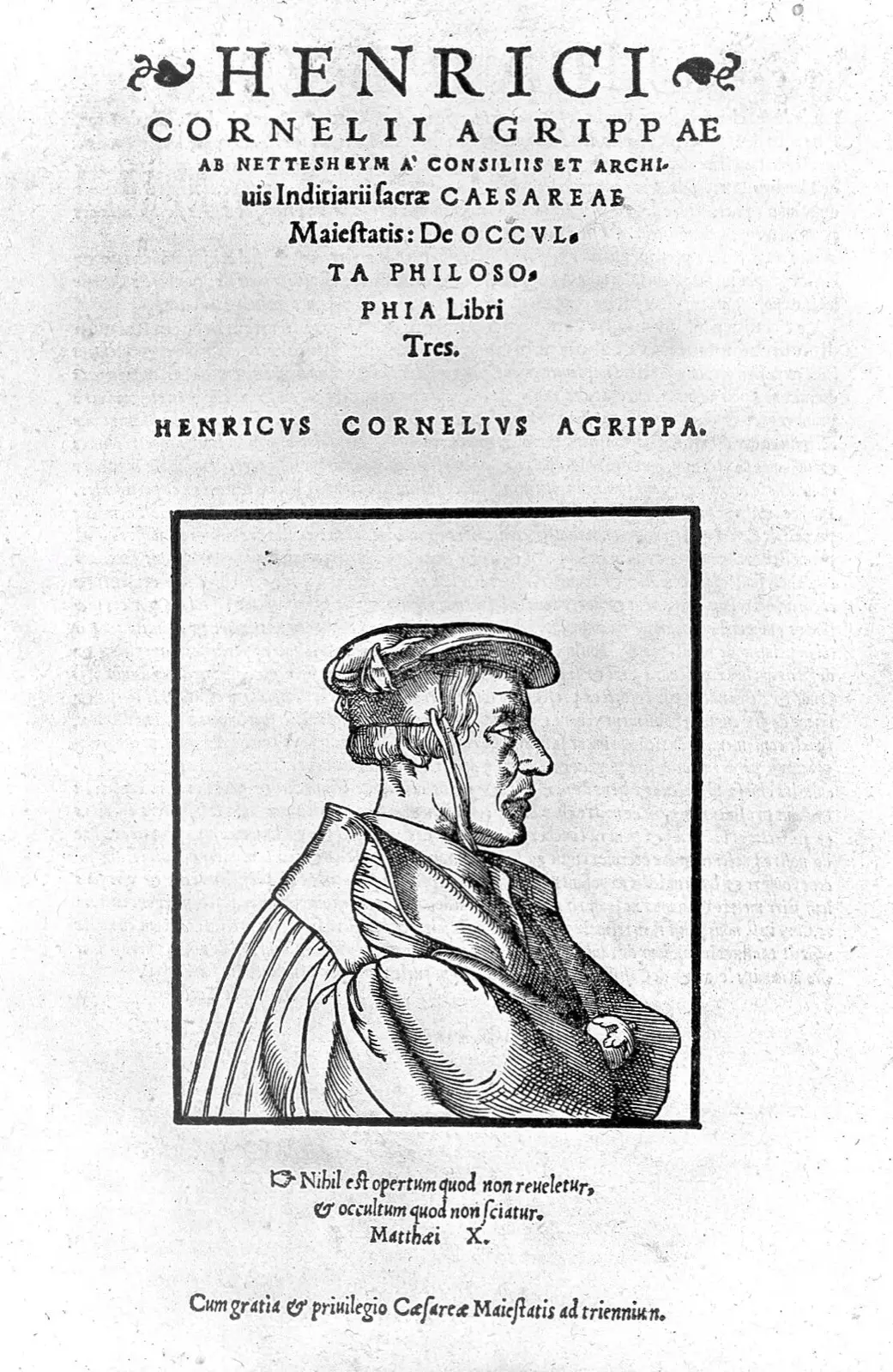
To sort it out, we have to go back to the source. That source is La Science cabalistique, the small book Lazare Lenain published in Amiens, France, in 1823, and the root of almost everything written today about the 72 angels. Lenain did not invent the idea of three angels. He took it from an author he admired, Heinrich Cornelius Agrippa, a Renaissance physician and philosopher whom his own century saw sometimes as a scholar, sometimes as a magician. Agrippa set it out in 1533 in his treatise On Occult Philosophy.
Three guardians, from three worlds
To the scholars of that era, the universe was made of three worlds nested inside one another: the world of God and the spirits, the world of the stars, and the world of the elements, where we live. Agrippa drew a conclusion from this that Lenain made his own: every human being receives three guardians, one from each world.
The first comes from God himself, at the moment the soul is created. Lenain calls him the sacred genius. He depends on no star; he enlightens the mind and guides a whole life.
The second comes from the world of the stars. He inclines us toward virtue and watches over our speech and over what Lenain calls the moral self (le moral), a term that then meant a person’s character and feelings.
The third comes from the world of the elements, in other words, of matter. He watches over the body: health, movement, the things we do every day.
Soul, character, body: the three floors, if you like, of a single life. Today’s authors tend to say “intellectual,” “emotional,” and “physical.” The words are modern; the idea is the one Lenain set down in 1823.
Three tables to find them
Lenain doesn’t just borrow the idea: he gives readers a way to find these three angels, using three tables built on the same number, 72.
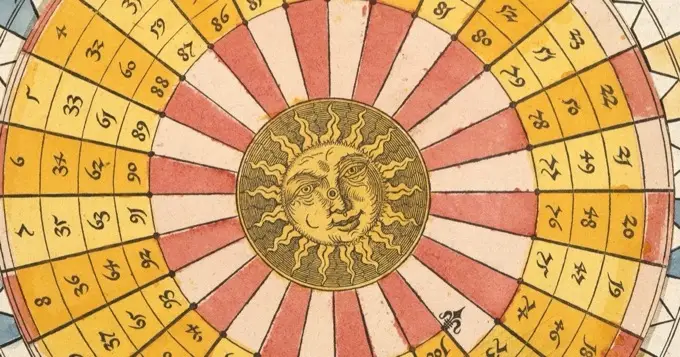
The first divides the year into 72 periods of five days. This is the one reproduced in the charts you may have seen: each period has its angel. It gives the angel of the body.
The second assigns an angel to each day, one after the other. Since there are 72 angels for 365 days, the cycle starts over five times a year. It gives the angel of the moral self.
The third divides the day into 72 twenty-minute slots, from midnight to midnight. It gives the angel of the soul, and it assumes you know the time of your birth to within twenty minutes.
Lenain gives an example himself: a person born on November 17 at a quarter past ten in the morning. The five-day table assigns the 49th angel, who watches over the body. The table of days gives the 27th, for the moral self. The table of hours names the 31st, the one who rules from 10:00 to 10:20 a.m., for the soul. One birth, and three different names.
Why the charts give only one
Now you can see what happened. Of Lenain’s three tables, the first is by far the easiest to use, since a date is all you need. So it is the one that spread, and its angel, the angel of the body and of our actions, is the one people now call the “birth angel.”
The other two ask more of you. The angel of the moral self has to be found to the exact day. The angel of the soul has to be found to within twenty minutes, and Lenain knew that was a lot to ask: few people, he notes, know the exact minute of their birth. In that case he advised reading the portraits of the three angels of the hour in question and keeping the one you most resemble.
Why I name only one for you
For my part, I made a choice, and I owe you the reason. I name only one angel for you: the angel of your date of birth.
Your date is certain. The time of your birth very often is not: it was jotted down in a hurry, rounded off, sometimes forgotten. I would rather give you one name I’m sure of than three names, two of which would remain uncertain.
Of the three, he is also the one closest to your everyday life: your health, your actions, what you set out to do. He is the one who walks at your pace.
One puzzle remains, and you may already have run into it. Look up this angel on two different websites, and there’s a good chance you’ll get two different names. I explain why in my next article.
Sources
- Lazare Lenain, La Science cabalistique, Amiens, 1823: procedure for knowing one’s genius, and fourth table.
- Heinrich Cornelius Agrippa, De occulta philosophia, 1533, book III, chapter 22.

Alma, Guardian of Angels