Chapter VI · Mirror Hours
11:11: Chance, Jung, and the Angel of This Hour
You glance at the clock, and it’s 11:11. Again. Many people see it as a sign; others call it pure chance. Before I tell you which angel tradition links to this hour, I’d like to share what mathematicians and psychologists have to say about it, because their answers shed light on tradition’s own.
By Alma, Guardian of Angels · 5 min read ·
A belief born with glowing digits
We have to start with a fact that almost always gets forgotten: mirror hours don’t appear in any old book. The Bible never mentions them, and neither do the Renaissance treatises or the old grimoires, for a good reason. As long as people told time from a clock face with hands, no one could see 11:11.
It wasn’t until digital alarm clocks and watches came along, in the 1970s and 1980s, that the time began to be written out in numbers, and that certain minutes, like 11:11, 12:12, or 10:10, started to look like a wink. So the belief is about as old as our clock radios. That’s no reason to look down on it, but it’s better to know.
What the math says
Mathematicians do a very simple calculation. A day has 1,440 minutes. Twenty-four of them are mirror hours (on a 12-hour clock, from 1:01 to 12:12, morning and evening), which is one minute in sixty. In other words, if you check the time sixty times a day, which isn’t much with a phone in your pocket, chance alone will give you one of them, on average.
In 1989, two American statisticians, Persi Diaconis and Frederick Mosteller, devoted an entire study to coincidences. Out of it came a law that people still quote: when the chances run into the millions, even the improbable ends up happening somewhere.
Psychologists add a second mechanism, which they call the frequency illusion. As soon as something has caught our attention, we notice it everywhere, and we forget all the times it wasn’t there. You remember seeing 11:11. You don’t remember seeing 11:08.
Jung’s answer: a meaning, not a cause
If we stopped there, there would be nothing more to say. But one man refused to stop there, and he was no dreamer. Carl Gustav Jung, the Swiss psychiatrist who founded analytical psychology, had spent decades listening to his patients tell him about coincidences that had shaken them to the core. In 1952, in a book published with Wolfgang Pauli, Nobel Prize winner in physics, he set out his theory of them under a name he had already been using for some years: synchronicity.
His definition is very careful. Jung does not say that the universe sends us messages. He says that two events can echo each other without one causing the other, and that what links them, in that case, is not a force but a meaning: the meaning they hold for the person living through them.
That distinction changes the question. Chance explains perfectly well why you saw 11:11. It doesn’t explain why, on that particular day, it tugged at your heart. Researchers have even measured this: according to a study published in 2024, the better our mood on a given day, the more meaningful coincidences we notice the next day. What we see depends on what we carry inside us.
Tradition’s answer: the angel of 11:11
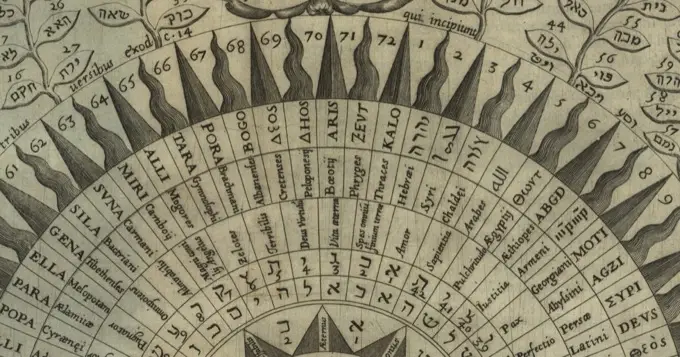
That leaves the question you may have had in mind when you came here: where does the angel linked to each mirror hour come from? You’re rarely told. It comes from a book published in Amiens in 1823, La Science cabalistique by Lazare Lenain. Long before there were screens, Lenain divided the day into 72 twenty-minute slots, from midnight to midnight, and entrusted each one to one of the 72 angels of the tradition.
Anyone can do the math. 11:11 in the morning falls in the slot that runs from 11:00 to 11:20 a.m. It’s the thirty-fourth slot of the day, and its angel is named Lehahiah.
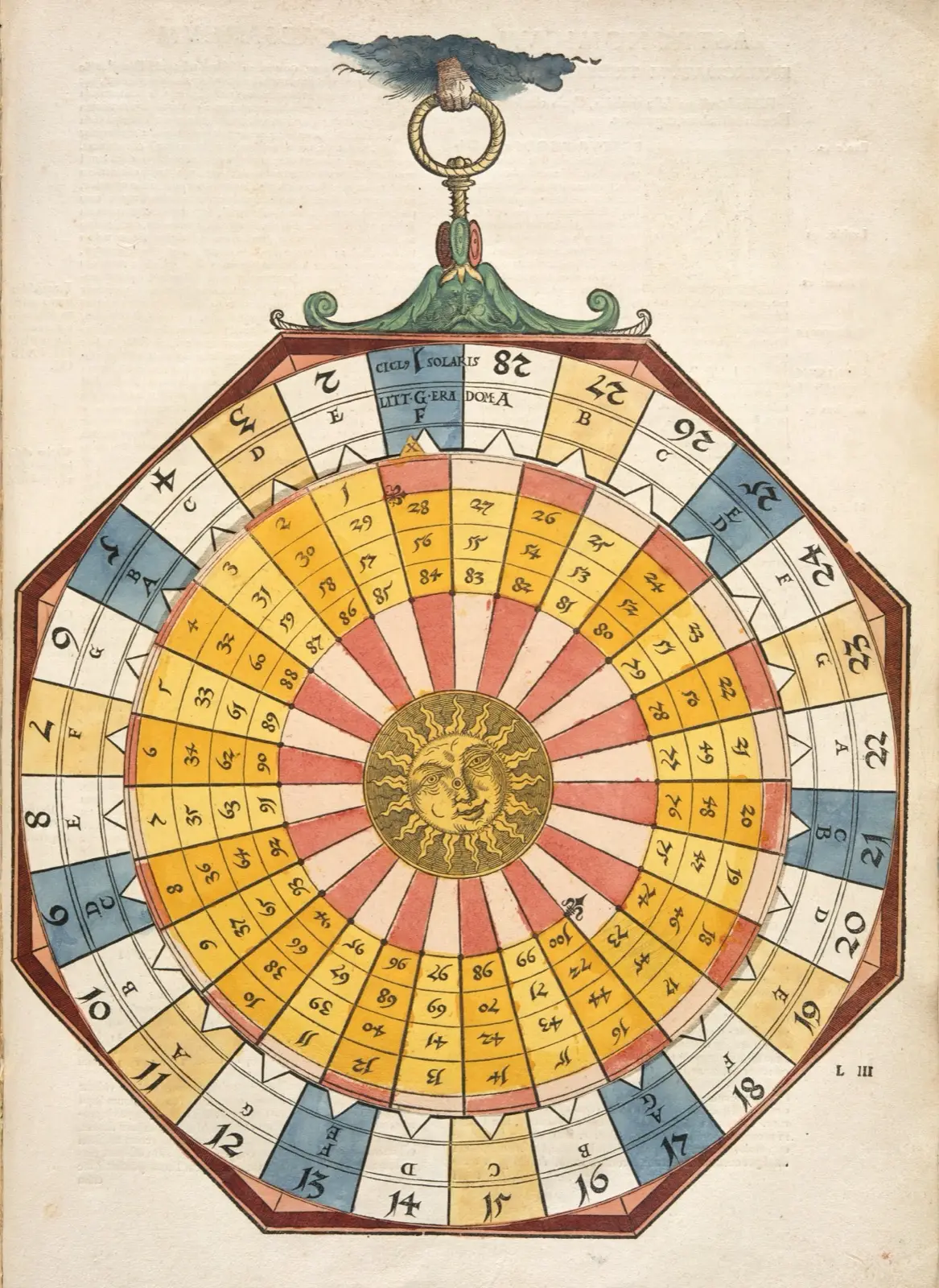
You can see what this means. It isn’t the minute that counts, but the slot: at 11:04 or at 11:19, the same angel keeps watch. 11:11 is simply the moment you happened to look up.
What should you do with an 11:11?
Here I have to be honest about what we know and what has been added since. The table of hours is two centuries old. The “messages” people now attach to each mirror hour are far more recent, and every website has its own, which alone should make us cautious.
So what should you do with an 11:11? I wouldn’t ask it to predict anything at all. Instead, I’d suggest asking yourself what you were thinking about the second before. That’s where Jung looked. And that, I believe, is also where we should look for the angel: not in the clock, but in the attention you paid, for one moment, to your own life.
One last word. The tradition that gives an angel to every hour first gives one to every birth. If 11:11 brought you here, perhaps this is your chance to get to know yours.
Sources
- Lazare Lenain, La Science cabalistique, Amiens, 1823: fourth table.
- Carl Gustav Jung and Wolfgang Pauli, Naturerklärung und Psyche, 1952.
- Persi Diaconis and Frederick Mosteller, “Methods for Studying Coincidences,” Journal of the American Statistical Association, 1989.
- “Today’s positive affect predicts tomorrow’s experience of meaningful coincidences,” Cognition and Emotion, 2024.

Alma, Guardian of Angels