Chapter I · Guardian Angels
Where Do the 72 Angels Come From? The Secret Hidden in Three Verses of Exodus
You have probably read that 72 angels watch over us, and that one of them has been with you since the day you were born. What people rarely tell you is where that number comes from. It comes from three sentences in the Bible, and from a very old way of reading them.
By Alma, Guardian of Angels · 7 min read ·
Three verses, the night the sea opened
The story begins in a passage you surely know, even if it’s been a long while since you opened a Bible: the crossing of the Red Sea. The Book of Exodus, the second book of the Bible, tells how the Israelites, led out of Egypt by Moses, find themselves trapped. Ahead of them lies the sea; behind them, Pharaoh’s chariots in pursuit; and night is falling.
It is at this moment, in chapter 14, that the story slows down. Three verses are enough to tell it all. In the first, the angel of God, who had been going before the camp, moves behind it to protect it. In the second, a cloud settles between the two armies: it makes night for one side and gives light to the other, so that no one comes near until morning. In the third, Moses stretches out his hand, an east wind blows until dawn, and the waters split apart.
We usually stop at the miracle. The readers I want to tell you about stopped at something else: the very shape of those three sentences.
Seventy-two letters, three times in a row
In Hebrew, the language in which Exodus was written, the first of these verses has exactly 72 letters. The second has 72 as well. So does the third. Three verses in a row, of exactly the same length, at the precise spot where the sea opens: 216 letters in all.
To understand what that meant, remember how this text came down to us. For centuries, scribes copied it by hand, letter by letter, counting the letters to make sure not a single one was lost. To these men, nothing in the Torah, the first five books of the Bible, was there by accident. A pattern like that could not have escaped them. It raised a question: why here, and why this number?
One line forward, one backward, one forward
Their answer lies in a way of reading that you could try yourself with a sheet of paper and a pencil. Write the first verse on one line, in its normal direction. Write the second right below it, but backward, starting from its last letter. Write the third beneath the other two, in the normal direction again. Because the three lines are the same length, they line up perfectly, and you end up with 72 columns of three letters.
Now simply read each column from top to bottom. Each column gives a group of three letters: 72 groups in all. The very first is made of the letters Vav, He, Vav. Remember it: we’ll meet it again later, in another guise.
Why turn the middle verse around? The Zohar, the great book of Jewish mysticism, which appeared in Spain at the end of the thirteenth century, offers an explanation I find very beautiful. The first line, it says, is the line of kindness, which goes straight ahead. The second is the line of severity, which swims against the current. The third holds the two together. Kindness, severity, balance: you may not believe a word of it and still recognize a pretty fair description of what it takes to get through a hard time.
A way of reading that is nine centuries old
I want you to know where all this comes from, because the story stands on firmer ground than people think, and it deserves better than the half-truths that usually surround it.
This way of reading is no recent invention. In the eleventh century, a rabbi known as Rashi lived in Troyes, in Champagne; his commentaries are still part of the study of Jewish texts today. He already describes the method in a few lines, as something everyone knew. A century later, between 1150 and 1200, it reappears in Provence in a small, enigmatic book, the Sefer ha-Bahir, the “Book of Brightness.” It is the oldest surviving text to lay out the whole procedure from our three verses, and it is also one of the first writings of the Kabbalah, the mystical tradition of Judaism.
Yet there is one point people almost always forget, and it changes the meaning of the whole story. For these first readers, the 72 groups of three letters are not angels. They are 72 fragments of the Name of God himself, which Hebrew calls the Shem ha-Meforash, the “Explicit Name.” Tradition says that Moses used it that night to open the sea; an older legend even has the waters drawing back when they saw this Name engraved on his staff.
How names of God became names of angels
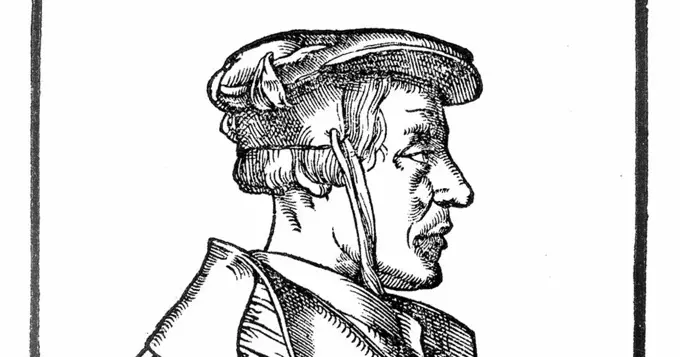
The turning point came in the Renaissance, from the pen of a Christian. In 1517, Johann Reuchlin, a German humanist who had learned Hebrew to read these texts in their own language, published a treatise on the Kabbalah. In it he took the 72 groups of letters and added an ending to each: “el” or “iah,” two ways of saying God in Hebrew. You know them without realizing it: you hear the first at the end of Michael, Gabriel, and Raphael, and the second at the end of hallelujah.
The addition looks tiny. Its consequences were immense. Groups of letters that no one could pronounce became names that could be spoken aloud, and from then on they were the names of angels. Vav, He, Vav, the first on the list, became Vehuiah: the name that, to this day, opens every list of the 72 angels.
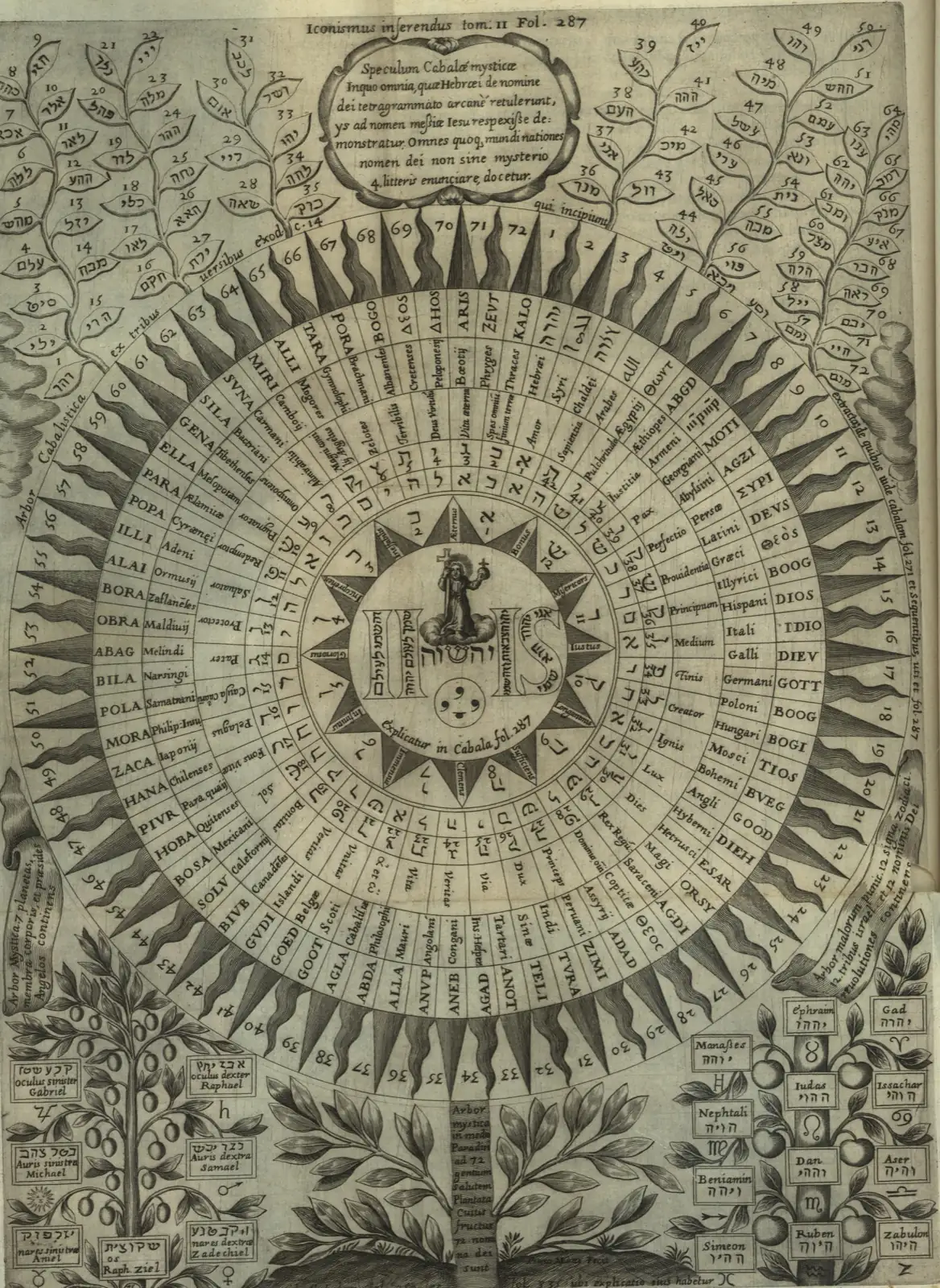
The rest is a story of books. In 1533, the physician and philosopher Heinrich Cornelius Agrippa reproduced the list in a treatise that would circulate among scholars all over Europe. In the following century, in Rome, the Jesuit Athanasius Kircher had it engraved as a great sun with 72 rays, in which each name is tied to one of the peoples of the Earth.
So let me be clear with you. Nowhere does the Bible list 72 guardian angels. What I have just told you is the story of a way of reading: first by Jewish mystics, then by Christian scholars, poring over three verses for more than nine centuries. You are free to see it as nothing more than a game with letters. For my part, I find it hard to believe that the same number turns up by chance, three times in a row, at the exact spot where a sea opens.
And where does your birth come in?
There is still one missing link in this chain. The 72 names have existed for centuries, but none of the authors I’ve just mentioned says that one of them watches over the day you were born.
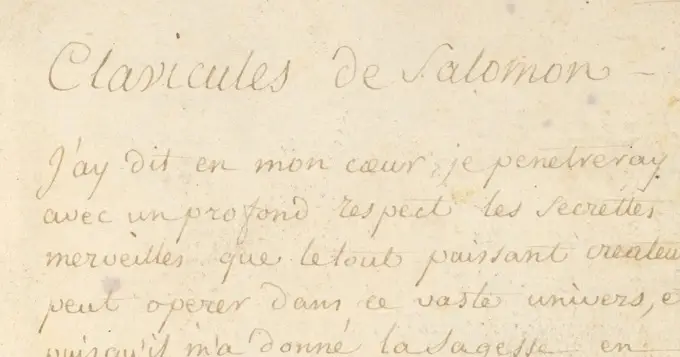
That idea is much more recent. It is also French. It appeared in 1823, in Amiens, in a small book printed in an edition of five hundred copies by a man nothing had prepared for the role: Lazare Lenain, a textile worker and the father of sixteen children. His story is unusual enough that I’ve devoted a whole article to him.
In the meantime, you can do what his readers were already doing two hundred years ago: look among the 72 for the one tradition links to your birth.
Sources
- Book of Exodus, chapter 14, verses 19 to 21.
- Rashi (11th century), commentary on the Babylonian Talmud, tractate Sukkah, 45a.
- Sefer ha-Bahir, Provence, around 1150-1200.
- Zohar, portion Beshalach.
- Johann Reuchlin, De arte cabalistica, 1517.
- Heinrich Cornelius Agrippa, De occulta philosophia, 1533, book III, chapter 25.
- Athanasius Kircher, Oedipus Aegyptiacus, Rome, 1652-1654.
- Wilhelm Bacher, “Shem ha-Meforash,” Jewish Encyclopedia, 1906.
Alma, Guardian of Angels