Chapter VII · Signs
They Felt the Presence of a Loved One Who Had Passed
A familiar perfume in an empty room. A voice at the edge of sleep. The certainty, for one second, that someone was there. If this has happened to you since losing someone dear, you may never have told a soul. Please know that others have lived through it too, and that researchers have taken the time to listen to them.
By Alma, Guardian of Angels · 5 min read ·
What we keep to ourselves
Some experiences we just don’t share. We dread the awkward smile, the word “grief” said in that knowing tone, and most of all being told that we’re losing our grip. So we keep quiet, sometimes for years, until we start to wonder whether we dreamed it.
The researchers who gather these accounts all notice the same thing: people who are grieving keep quiet, for fear of being laughed at or seen as fragile. That is why I want to tell you what research actually knows about these experiences. No more, and no less.
One thousand and four people agreed to tell their story
In 2021, BJPsych Open, a British psychiatry journal from Cambridge University Press, ran an unusual study. Its lead author, Evelyn Elsaesser, lives in Switzerland, in the canton of Vaud, and studies this subject with three British researchers. Together, they gathered the accounts of 1,004 people, in English, French, and Spanish.
All of them described the same thing: one day, without looking for it, they sensed the presence of someone who had died. The researchers gave this experience a name, after-death communication (ADC): in French research, “subjective experience of contact with a deceased person.” The word “subjective” matters. It means they describe what the person went through, without ruling on what really happened.
A presence seen, heard, or simply felt
The most common contact happens during sleep. But many others happen in broad daylight, when you least expect it.
Nearly one in two people say they saw the person who had died. Others heard them, felt a touch, recognized a familiar scent, or simply sensed a presence in the room. In nearly eight cases out of ten, the researcher notes, it was a family member.
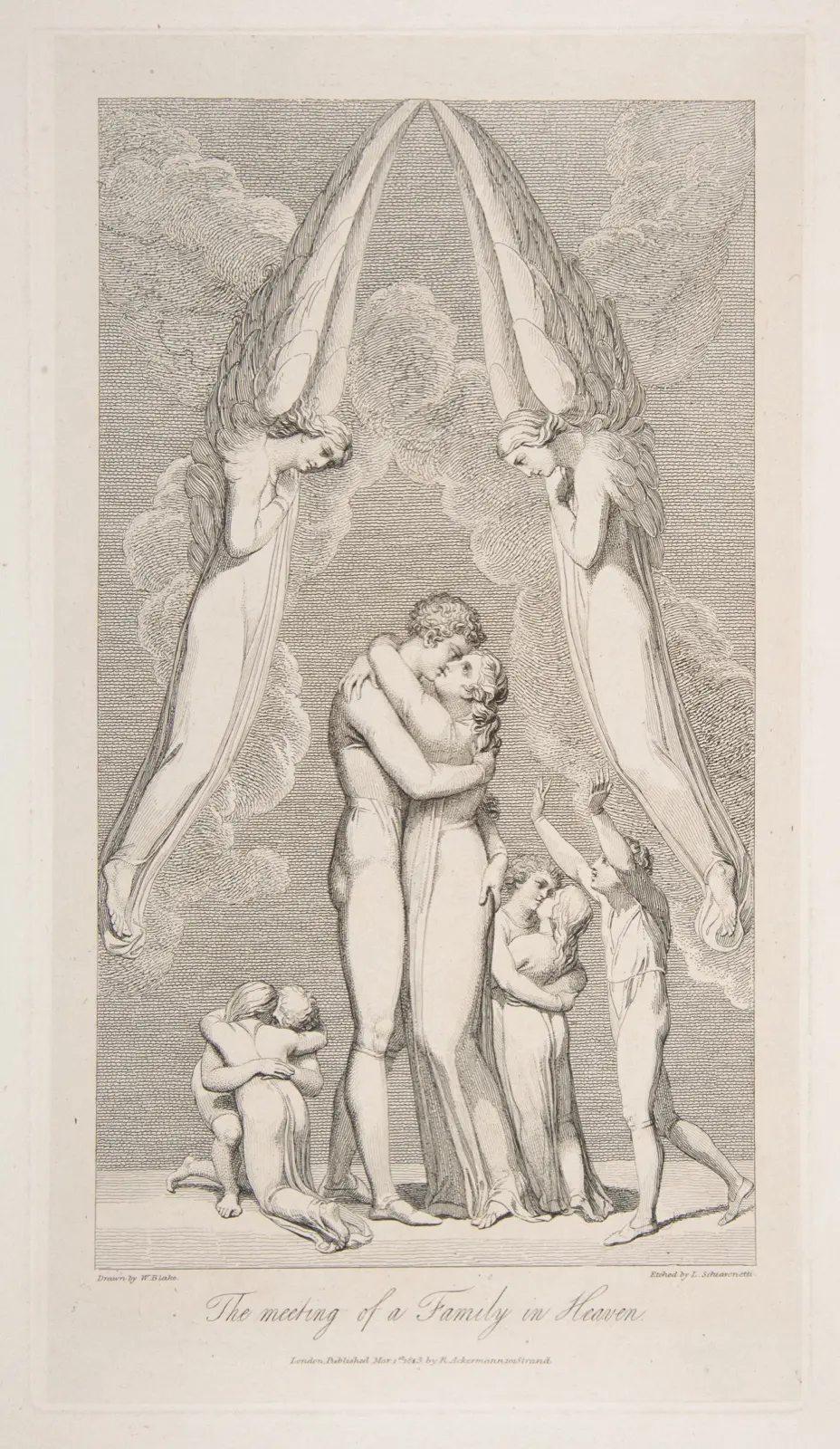
One thing struck me in particular as I read. Belief makes no difference: believers, agnostics, and atheists, according to Evelyn Elsaesser, are just as likely to have such a contact. So this isn’t a matter of faith.
Experiences that bring comfort
The vast majority of the messages people perceive are reassuring. Those who received them say they came away comforted, and that their spiritual life grew deeper, though they didn’t necessarily become more religious.
This isn’t a new finding. Back in 1971, a Welsh country doctor named Dewi Rees interviewed nearly three hundred widows and widowers in his area. Close to half told him they had felt, seen, or heard their husband or wife after the death. His conclusion, published in the British Medical Journal, one of the world’s leading medical journals, came down to a few words: these experiences are a normal part of widowhood, and they do people good.
What science doesn’t say
Here I need to be more precise than anywhere else, because this subject touches what is dearest to us. These studies describe what people experience. They don’t say where it comes from. In the very title of their article, the researchers use the word “hallucinations,” in the medical sense of a perception whose object can’t be observed, and they don’t choose between the brain and heaven.
I won’t decide for you, either. I won’t tell you it was your angel, or that it was the person you lost. Nor will I tell you it was nothing. I’ll only tell you this: you haven’t lost your mind, you’re not the only one this has happened to, and what you lived through has a name in the medical journals.
And if your grief overwhelms you, don’t stay alone with it with no one to talk to. Talk to someone close to you, or to your doctor. No sign, however gentle, can take the place of a hand held out to you.
Why I write about this in a Book of Angels
You may be wondering what this article is doing here. The tradition of the 72 angels gives dreams a large place: in the book by Lazare Lenain that founded it in 1823, several angels are said to bring revelations during sleep. I draw no proof from that. I only see a very old kinship: it is at night, when our guard is down, that the living have always said they had visitors.
If you would like to know the angel this tradition links to your birth, I’ll gladly tell you, without promising you anything more than his name.
Sources
- E. Elsaesser, C. A. Roe, C. E. Cooper and D. Lorimer, “The phenomenology and impact of hallucinations concerning the deceased”, BJPsych Open, 2021.
- M. Woollacott et al., “Perceptual phenomena associated with spontaneous experiences of after-death communication”, Explore, 2021.
- W. D. Rees, “The hallucinations of widowhood,” British Medical Journal, 1971.
- Evelyn Elsaesser, Spontaneous Contacts with the Deceased, Iff Books, 2023.

Alma, Guardian of Angels