Chapter V · Guardian Angels
What the Church Says About Your Guardian Angel, and What It Will Never Say
Every October 2, the Catholic Church celebrates the guardian angels. Yet for sixteen centuries, it has asked that they not be given names. Before going any further, I want to tell you clearly what it teaches, what it sets aside, and which side I stand on.
By Alma, Guardian of Angels · 5 min read ·
What the Church affirms: an angel for each person
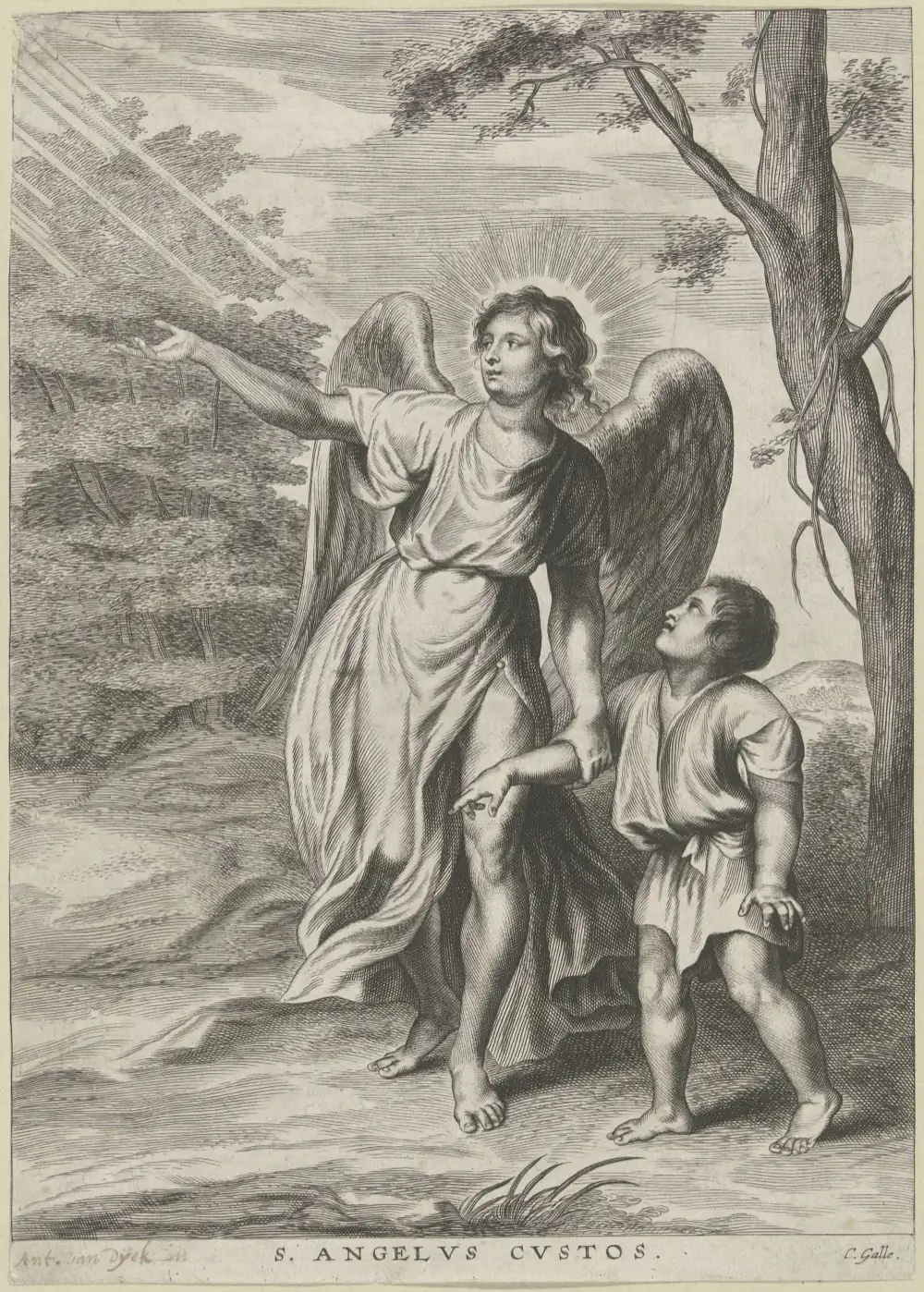
Let’s begin with what is beyond doubt. The Catholic Church believes in guardian angels, and it doesn’t treat them as a pious picture for children. Its Catechism, the reference text published in 1992 under John Paul II, counts the existence of angels among the truths of faith. It says that human life, from its beginning until death, is surrounded by their watchful care, and it quotes a line from Saint Basil, a fourth-century bishop: every believer has an angel beside him as protector and shepherd.
This belief goes back a long way. In the Gospel of Matthew, Jesus speaks of the “little ones” whose angels in heaven always see the face of the Father. Around the year 400, Saint Jerome, who translated the Bible into Latin, concluded from this that every soul receives an angel at birth, and he saw it as a sign of the great dignity of souls. In the thirteenth century, Thomas Aquinas, the greatest theologian of the Middle Ages, said it again in his Summa Theologica: an angel for each person, from birth.
A feast, every October 2
The Church even gave these companions a place on its calendar. Their feast began to be celebrated here and there in the late Middle Ages, in Toledo and Rodez, for example. In 1608, Pope Paul V extended it to the whole Church. It was later set on October 2, three days after the feast of the archangels Michael, Gabriel, and Raphael on September 29.
None of this is a thing of the past. Pope Francis returned to it more than once. The guardian angel, he said in essence, is not a flight of fancy: he is a companion for the road.
What the Church sets aside: the names
This is where things get complicated. In 2001, the Vatican published a document on popular devotions, the Directory on Popular Piety and the Liturgy. In paragraph 217, it calls devotion to the angels legitimate and good. Then it warns against one habit: giving the angels particular names. Only three names are allowed, because they are the only ones the Bible knows: Michael, Gabriel, and Raphael.
This caution is not some new strictness. It is sixteen centuries old. In 364, the Council of Laodicea, a gathering of bishops in Asia Minor, was already speaking out against those who worshiped angels. In 745, in Rome, another gathering of bishops condemned a prayer that called on several angels unknown to Scripture, Uriel among them. In 789, Charlemagne repeated the ban in a law addressed to his whole kingdom: no one was to invent or speak the names of unknown angels.
The reason most often given is simple, and there is nothing petty about it. To name someone is to exercise a kind of authority over them, the way parents do over their child. But for the Church, the angels do not belong to us: they belong to God, and God is the one who sends them.
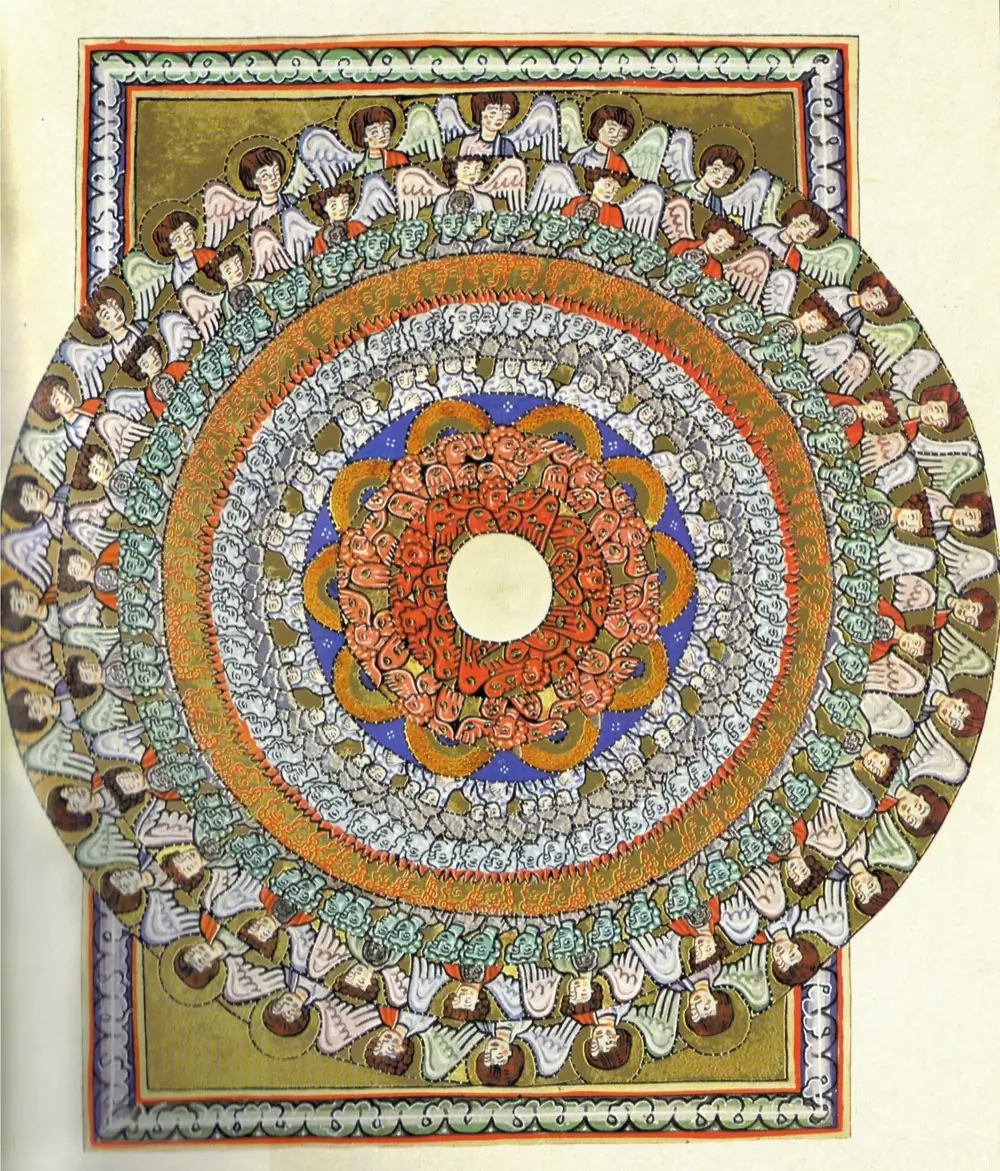
Where the tradition of the 72 angels stands
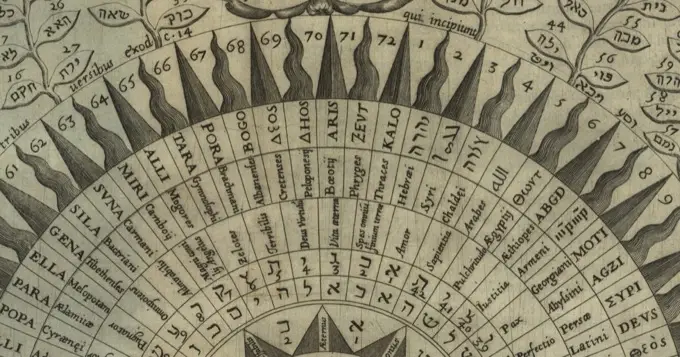
So I owe you the most important clarification in this entire Book of Angels. The 72 names I write about do not come from the Church. They come from the Kabbalah, the mystical tradition of Judaism, then from Christian scholars of the Renaissance, and then from a Frenchman named Lazare Lenain, who linked them to the days of the year in 1823. It is a tradition that runs alongside Catholic doctrine, not inside it.
If you are a practicing Catholic, you needed to know this before going any further. I will never tell you that the Church approves of what I do. That would be lying to you.
And yet I believe both paths begin with the same sense of wonder: the feeling that no one goes through life alone. The Church answers it with an angel who has no name, to whom we pray with our eyes closed. The tradition of the 72 answers it with a name, which we meditate on the way we meditate on a verse of Scripture. Only you can decide, in conscience, whether these two paths can meet in your life.
A thousand-year-old prayer that asks for no name
There is, in fact, one prayer no one will quarrel with you over, whatever you believe. It begins with these words: “Angel of God, you who are my guardian.” It is nearly a thousand years old. For a long time it was attributed to Saint Anselm, but it actually comes from a poem by Reginald of Canterbury, a Benedictine monk of the late eleventh century. Generations of children learned it in catechism class.
It doesn’t ask for any name. It asks only four things of the one who keeps watch: to light, to guard, to guide, and to rule the one who prays.
If, after all this, you would like to know the name the tradition of the 72 links to your birth, the door is still open. You now know exactly what it is, and what it is not.
Sources
- Catechism of the Catholic Church, 1992, paragraphs 328 to 336.
- Congregation for Divine Worship, Directory on Popular Piety and the Liturgy, 2001, paragraphs 213 to 217.
- Gospel of Matthew, chapter 18, verse 10.
- Saint Jerome, Commentary on the Gospel of Matthew, around 398.
- Thomas Aquinas, Summa Theologica, First Part, Question 113.
- Council of Laodicea (364), canon 35; Roman synod of 745; Admonitio generalis (789).
- The “Angele Dei” prayer, drawn from a poem by Reginald of Canterbury, late eleventh century.
Alma, Guardian of Angels